01
Obverse and reverse
The front and back work as a pair. Photograph the complete design on both faces, including the rim.
Practical guide
Start with a likely identification, not a price. Photograph both faces, then compare the inscriptions, denomination, date, mint mark, edge, size, and weight. Those clues can narrow the type and variety; they do not authenticate or officially grade the coin.
Free download on iPhone and iPad · Optional Pro features
What to look for
A single portrait can match many issues. Capture the combination of design, text, production marks, and physical dimensions before accepting a likely result.
The front and back work as a pair. Photograph the complete design on both faces, including the rim.
Transcribe every readable word, numeral, symbol, and stated denomination—even when the language is unfamiliar.
Record the date and any small letter or symbol that may identify the mint. Position matters, so keep nearby details visible.
Note whether the edge is plain, reeded, lettered, or decorated, then record diameter and weight when you can measure safely.
Step by step
Work over a soft surface and avoid rubbing or cleaning a potentially collectible coin before identification. Cleaning can scratch the surface and reduce value.
Use even, diffuse light and a plain background. Keep the full rim, design, date, mint mark, and inscriptions sharp without glare.
Record the country or language, denomination, date, portrait, symbols, legends, mint mark, edge type, diameter, and weight.
Check the suggested type against both faces and official specifications. Similar designs, years, and varieties can differ in small but important ways.
Treat the photo result and value context as a starting point. For a meaningful authenticity, grade, variety, or value decision, have the physical coin examined by a qualified specialist.
Inside the app
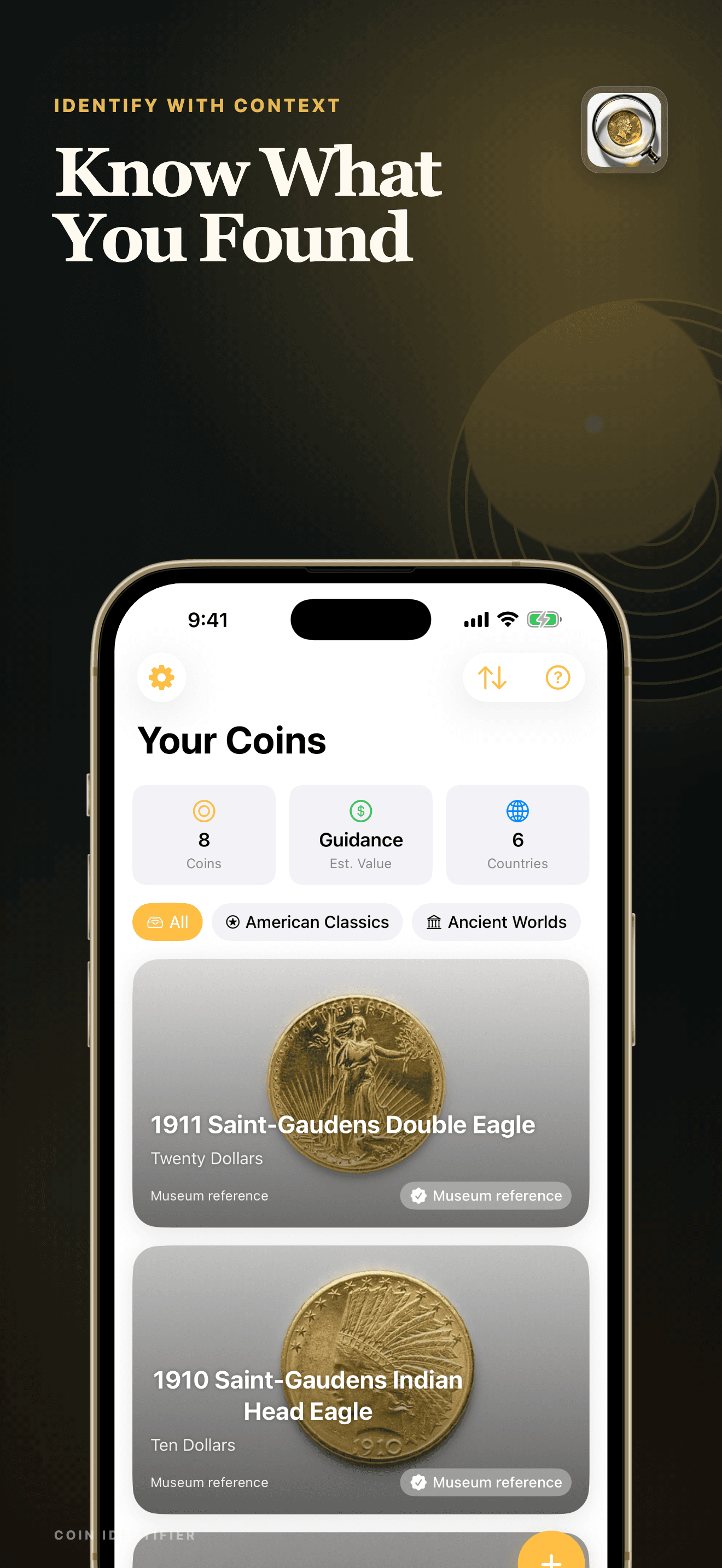
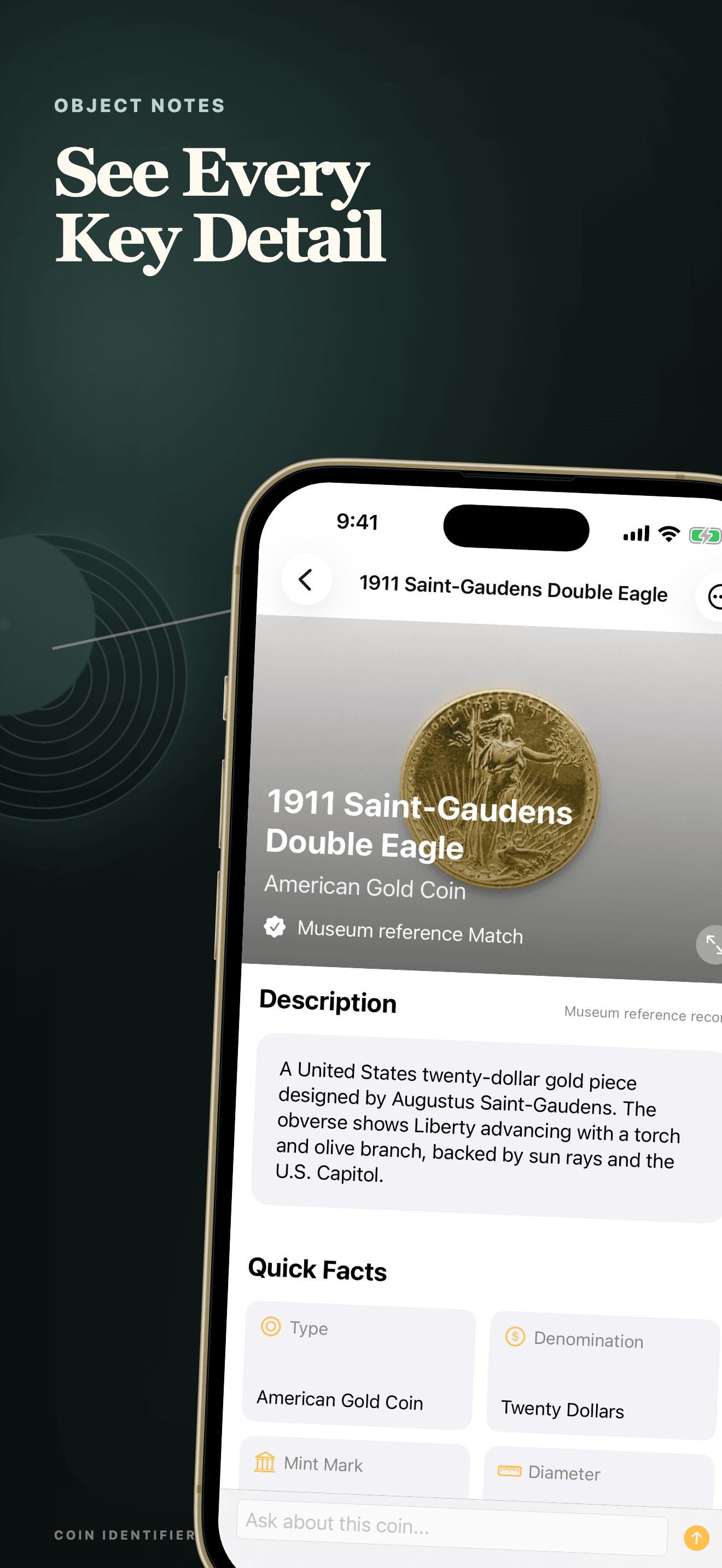
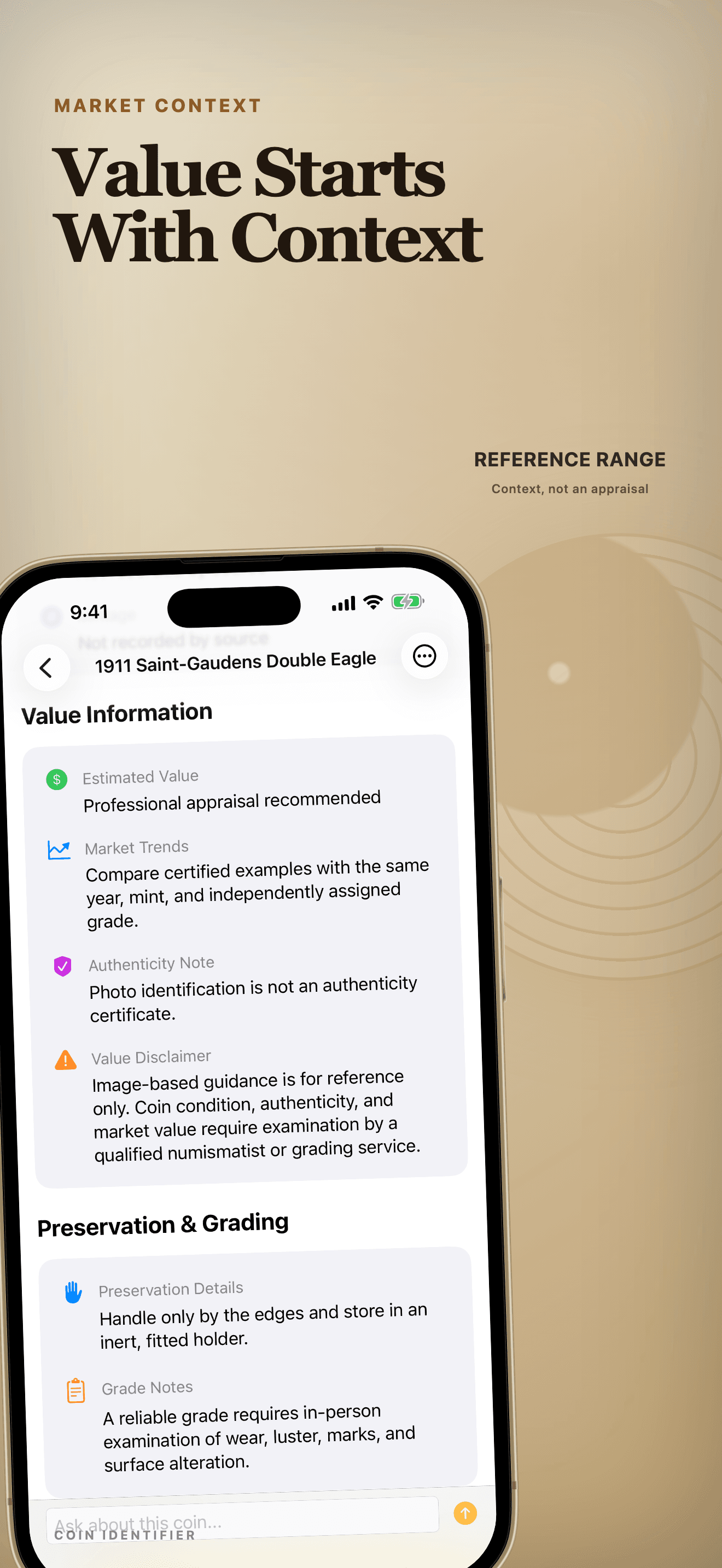
These are actual Coin Identifier screens. The app organizes a likely match and reference context so you can compare details instead of trusting one label.
Try the app
Coin Identifier analyzes photos of both sides and suggests a likely type, denomination, country, period, date, and mint. It then keeps visible details, condition and value context, history, follow-up questions, and private collection notes together.
Primary references
These references support the terminology, handling, and verification limits in this guide. They do not endorse the app.
Direct answers
Photograph the complete obverse and reverse in even light, then compare the legends, denomination, date, mint mark, design, and edge. Coin Identifier can suggest a likely match, but important details still need independent verification.
The most useful clues are both faces, readable inscriptions, denomination, date, mint mark, portrait or symbols, edge type, diameter, weight, metal appearance, and where the coin was found or obtained.
Usually not. The U.S. Mint cautions that polishing or cleaning can reduce value, and brushing or rubbing can scratch the surface. Photograph it as found and ask a qualified conservator before treating a potentially valuable coin.
No. A photo can support a likely identification and broad value context, but exact variety, authenticity, official grade, surface alteration, provenance, and current demand can materially change the value.
No. The app does not authenticate, certify, or assign an official numeric grade. Professional certification involves expert examination and a formal grading process using the physical coin.