01
Whole plant and habit
Show whether it grows upright, trailing, climbing, rosette-forming, woody, clumping, or spreading, plus its approximate size and branching pattern.
Practical guide
One photo can suggest a useful starting point, but a stronger plant identification compares the whole plant, leaves, stems, flowers or fruit, growth habit, season, and location. Treat the result as a possible match until several independent clues agree.
Free download on iPhone · Returns a possible visual match
What to look for
Many unrelated plants share a leaf shape. Identification becomes more reliable when the plant’s structure, reproductive features, and growing context support the same name.
Show whether it grows upright, trailing, climbing, rosette-forming, woody, clumping, or spreading, plus its approximate size and branching pattern.
Compare leaf arrangement, shape, edge, veins, surface, color, attachment, stem form, sap, hairs, thorns, and other distinctive structures without touching an unknown irritant.
When present, photograph flowers from the front and side, then record fruit, cones, pods, berries, or seed heads. These features often separate close lookalikes.
Note whether the plant is cultivated or wild, indoors or outdoors, plus country or region, habitat, flowering season, and nearby conditions.
Step by step
Take a clear whole-plant photo, a close leaf-and-stem view, and flowers, fruit, bark, or other distinctive parts. Use natural light and avoid filters or heavy digital zoom.
Add a broad region, habitat, season, and whether the plant is cultivated. Do not publish a private home location or the precise location of a rare or sensitive species.
Check the proposed common and scientific names against several visible traits. Reject a suggestion when the leaf arrangement, flower, fruit, growth habit, or regional range conflicts.
Use a regional flora, herbarium, extension service, or authoritative plant database. Scientific names help distinguish unrelated plants that share a common name.
Never eat, brew, apply, medicate with, or feed a plant to a person or animal based on a photo match. Visible symptoms can have several causes and may need an extension specialist, veterinarian, poison center, or clinician.
Inside the app
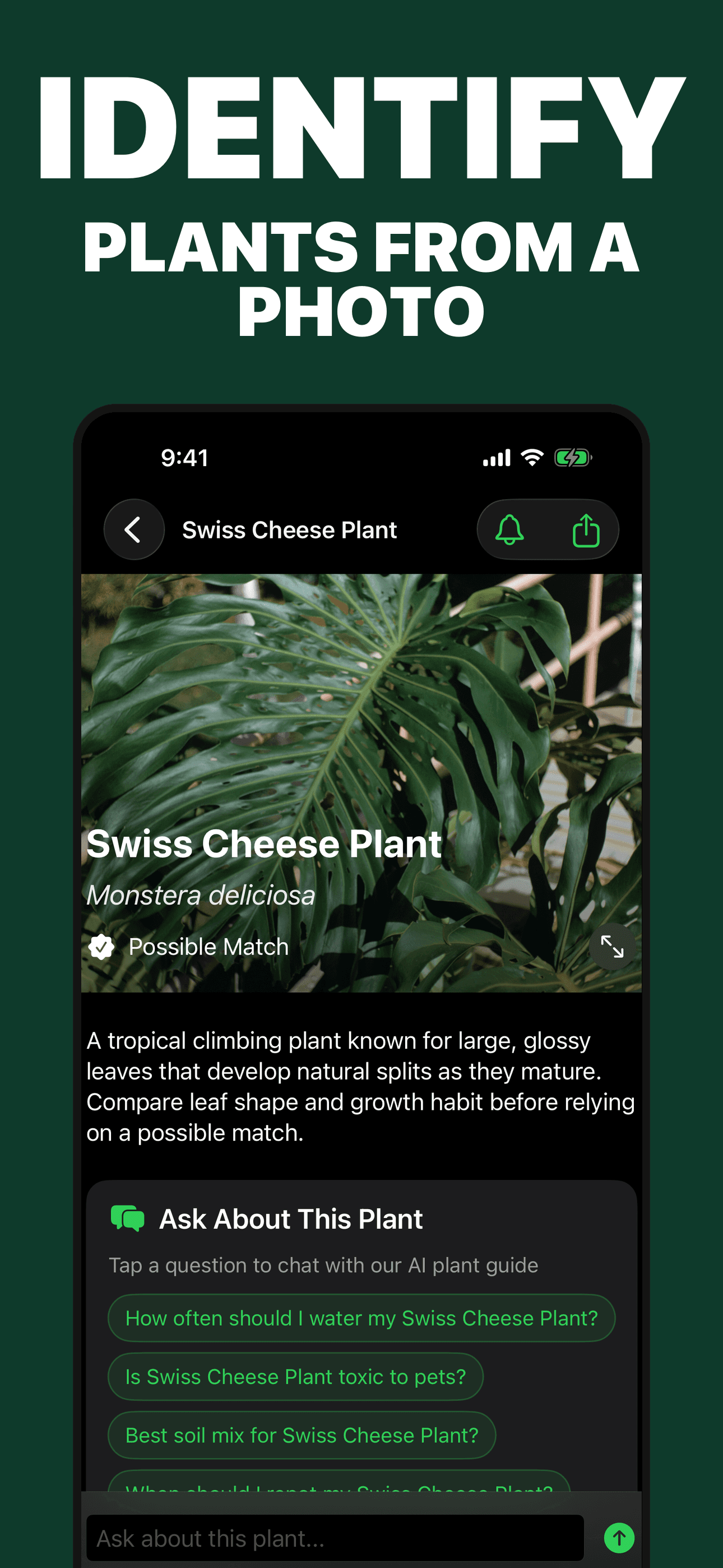
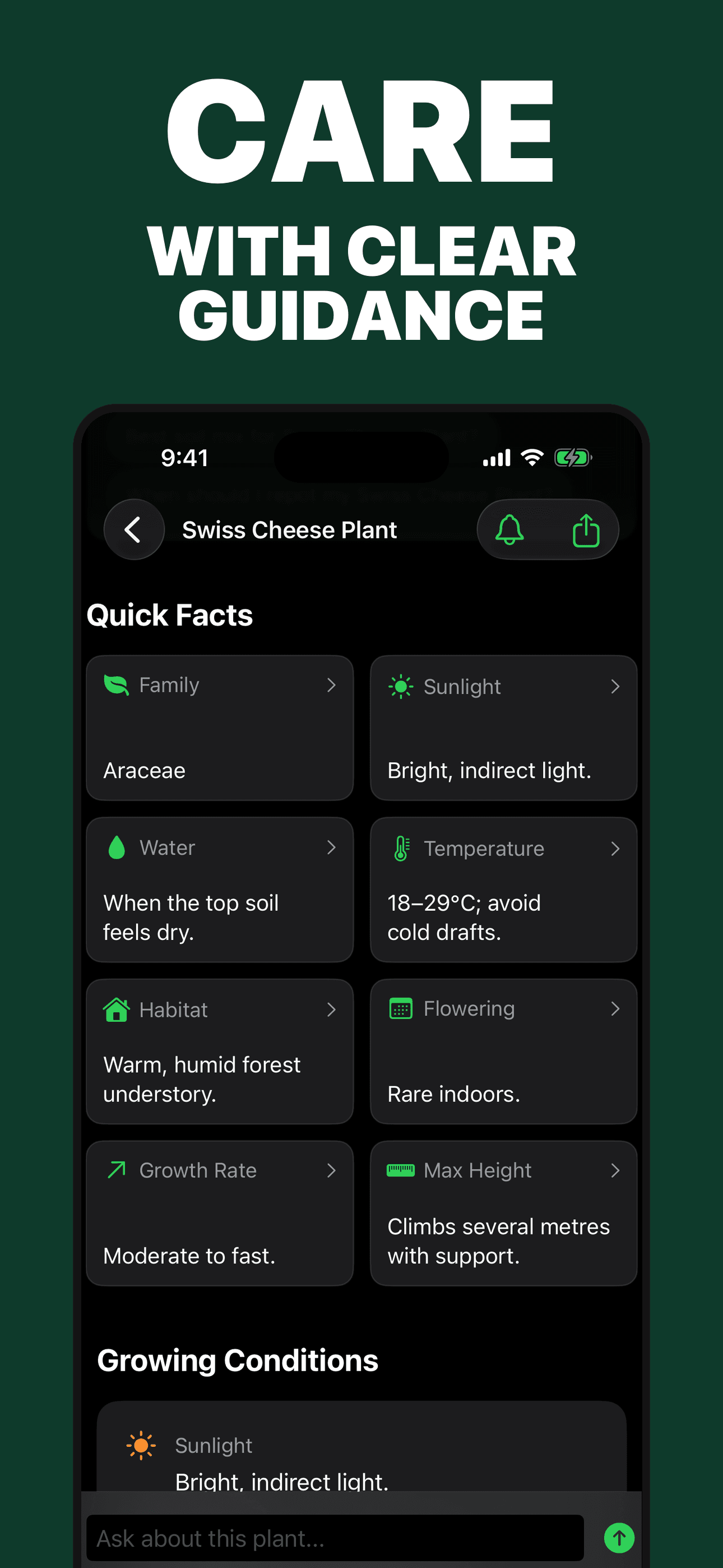
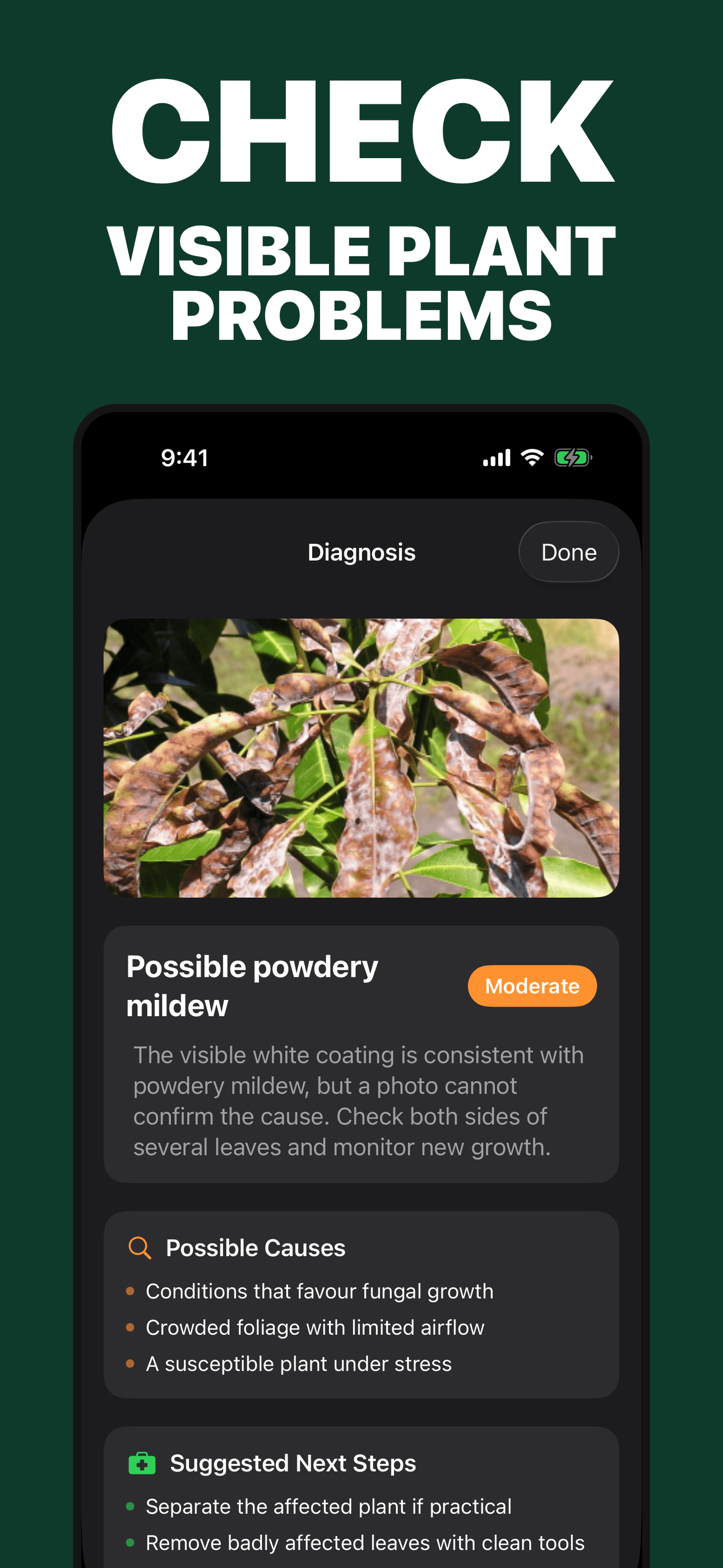
These are actual Plant ID and Care Guide screens. Identification and visible-problem results are possible AI suggestions, not verified botany, toxicity advice, or professional diagnosis.
Try the app
Plant ID and Care Guide can suggest a possible visual match, organize visible traits and reference information, explore care context, check visible symptoms, answer plant-specific follow-ups, and save records in a private plant journal.
Primary references
These references support the identification, plant-health, and exposure boundaries in this guide. They do not endorse the app, and regional authorities may provide more relevant information outside the United States.
Direct answers
Use several clear views: the whole plant, leaves attached to the stem, and any flowers, fruit, seeds, bark, or distinctive structures. Compare the possible match with growth habit, season, habitat, and regional range before accepting it.
A useful set includes one whole-plant view for shape and scale, one close leaf-and-stem view for arrangement and texture, and focused photos of flowers or fruit. Natural light, a plain background, and an unfiltered image preserve useful detail.
No. It can suggest a possible visual match, but similar species, cultivars, hybrids, seasonal changes, incomplete photos, and regional lookalikes can produce the wrong answer. Verify important identifications with an authoritative regional source or qualified expert.
No. Never eat, brew, apply, medicate with, or feed an unknown plant to a person or animal based on an app result. For a suspected exposure, contact the appropriate poison center, veterinarian, or emergency service instead of waiting for an image identification.
No. It describes visible symptoms and possible causes from a selected photo. Light, water, soil, temperature, pests, chemicals, physical damage, and pathogens can create similar symptoms, so treatment decisions may require local extension or professional diagnosis.