01
Cap surface and margin
Photograph the cap from above and the side. Record shape, color, texture, scales, patches, striations, bruising, and how the margin changes with age.
Practical guide
A mushroom photo can support a possible match for learning, but it cannot prove edibility or safety. Compare the cap, underside, stem, intact base when visible, substrate, habitat, season, and regional look-alikes—and never consume a wild mushroom based on an image result.
Free download on iPhone · Never determines edibility
What to look for
Cap color alone is weak evidence. A useful observation preserves several structural and ecological clues, because dangerous and edible species can resemble each other.
Photograph the cap from above and the side. Record shape, color, texture, scales, patches, striations, bruising, and how the margin changes with age.
Without tasting, show the underside clearly. Note whether there are gills, pores, ridges, or teeth and how they meet the stem.
Show the full stem and any ring, veil remnants, texture, color change, or cup-like base already visible. A cropped base can hide important distinctions.
Record whether it grows on soil, wood, litter, dung, or a living tree, plus nearby trees, clustering, season, weather, and a broad region.
Step by step
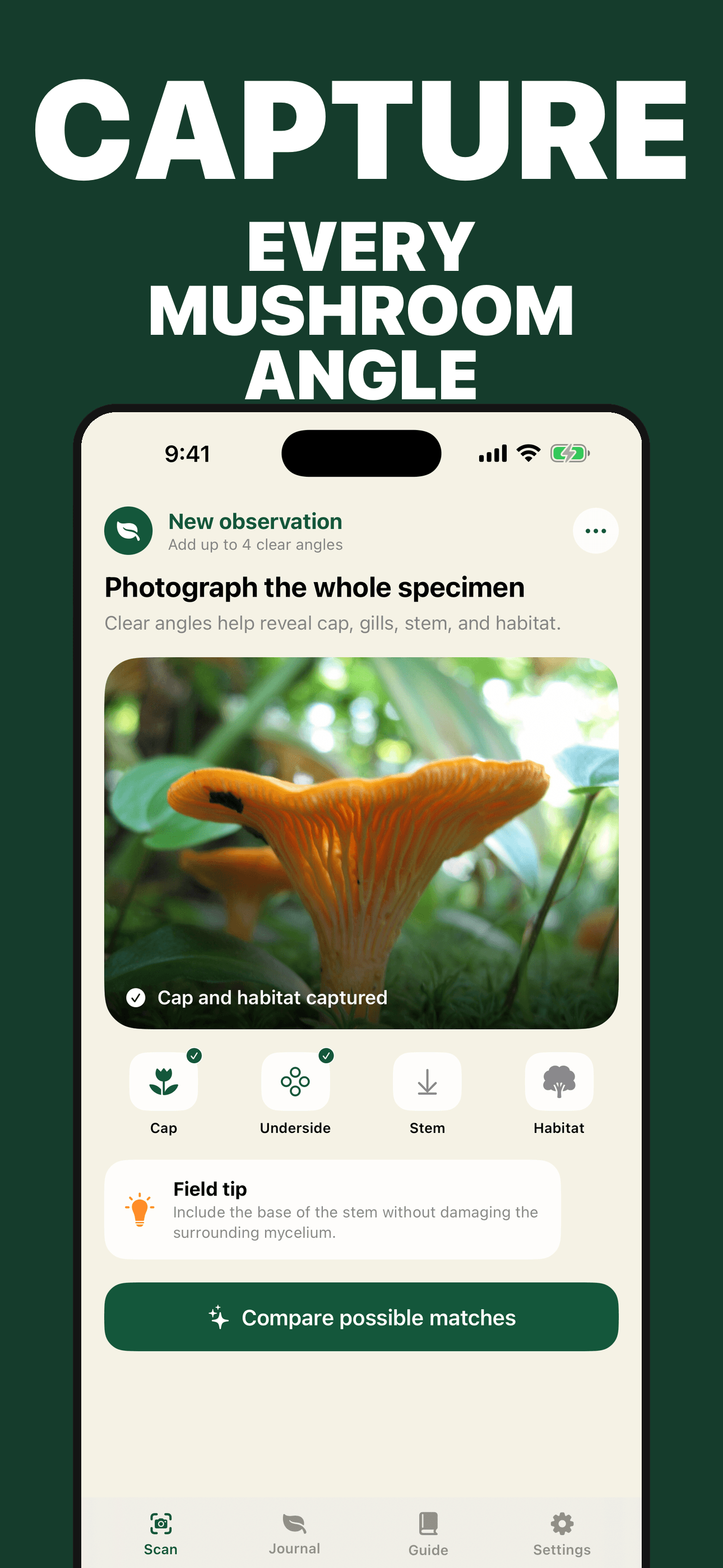
Photograph the mushroom where it grows: one habitat view, one whole-specimen view, the cap, underside, stem, and any naturally visible base. Avoid tasting and unnecessary handling.
Note the substrate, nearby trees or plants, solitary or clustered growth, date, recent weather, and broad region. Do not publish a private location or disturb protected habitat.
Check the suggested species against every visible feature and several regional look-alikes. Reject a match when cap, underside, stem, base, substrate, or season conflicts.
Save photos and notes in a field journal so changes, habitat, and later expert corrections remain attached to the same observation.
Do not eat, taste, cook, preserve, sell, serve, or give a wild mushroom to a person or animal based on an app, photo, folk test, or one field-guide image. Cooking does not make every toxin safe.
If anyone may have eaten a wild mushroom, contact the local poison center or emergency service promptly. Do not wait for symptoms or for an app result; keep photographs and any remaining specimen only if it is safe to do so.
Inside the app
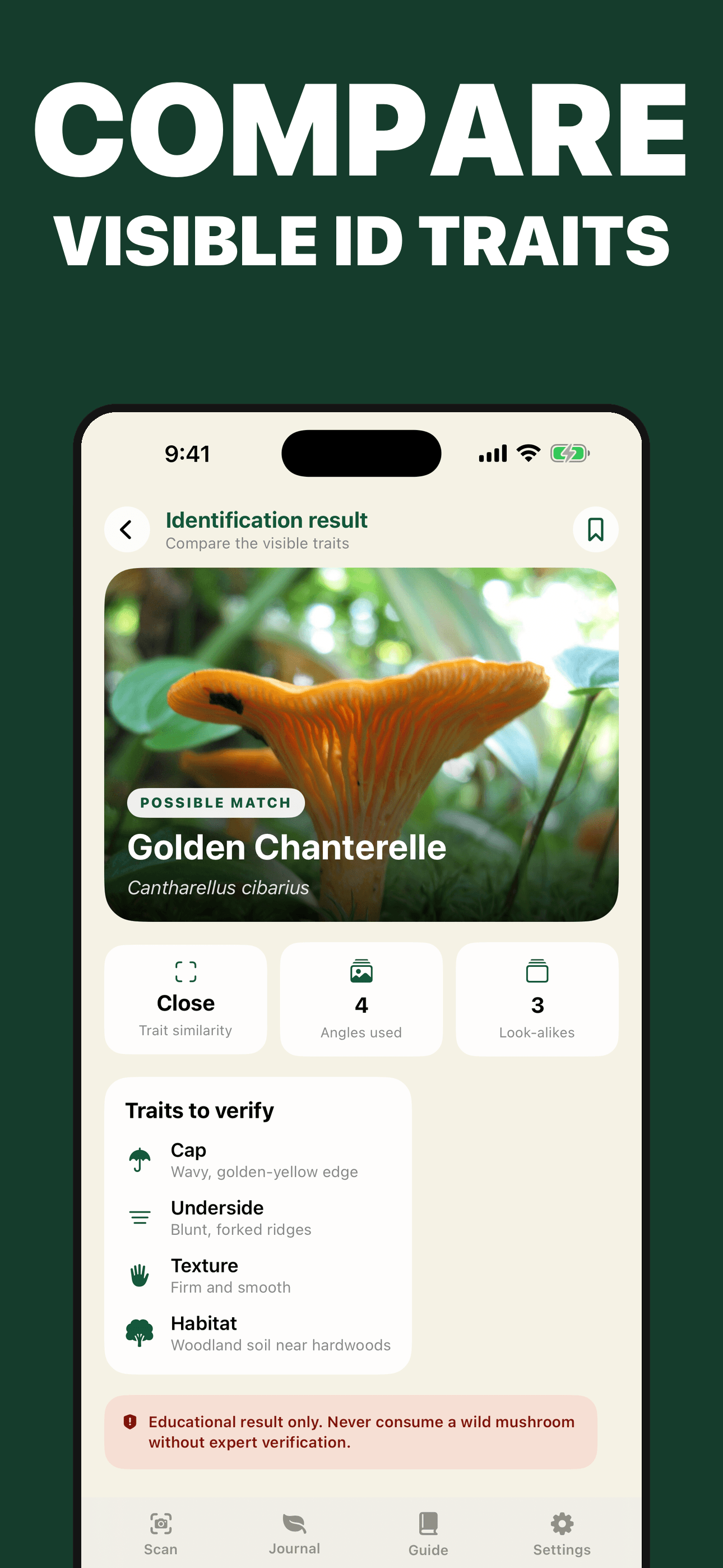
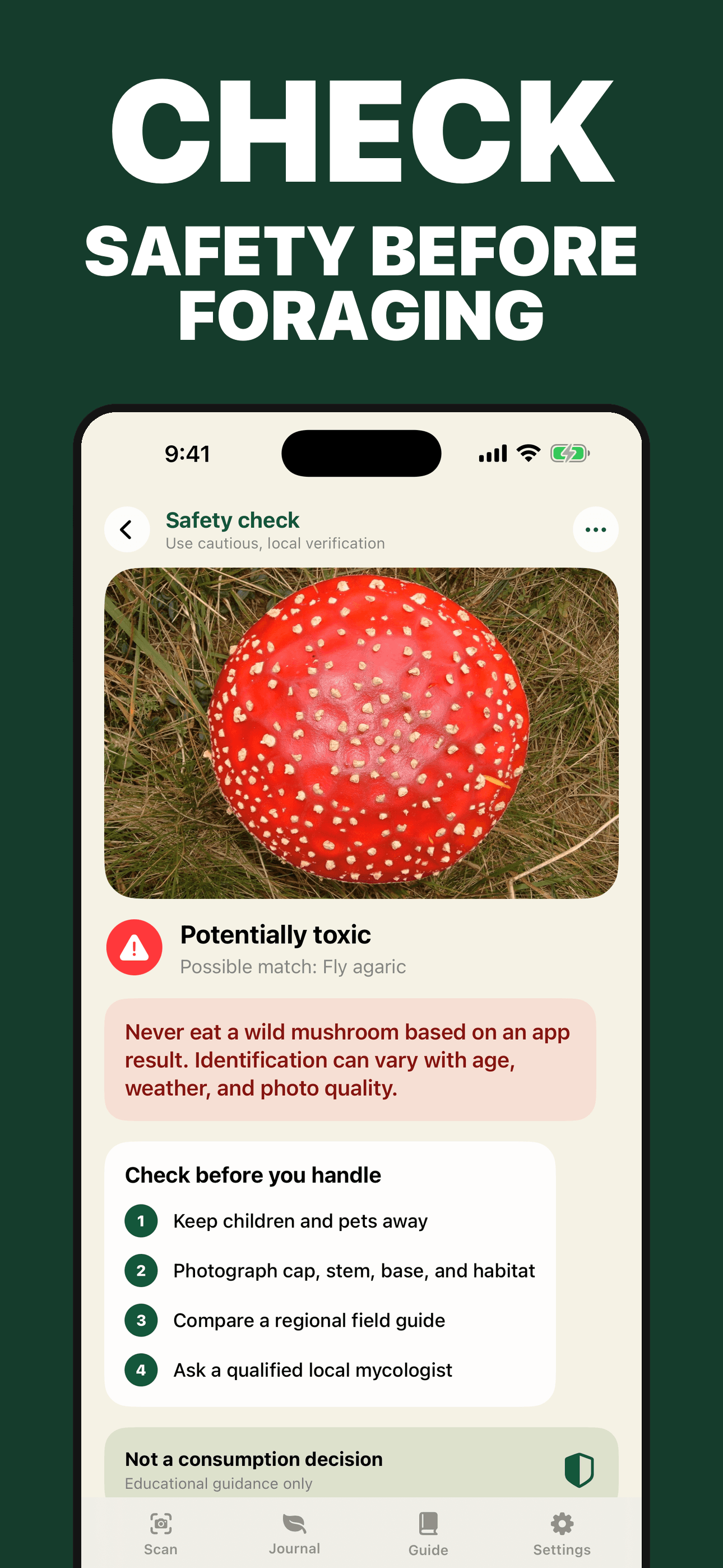
These are actual Mushroom Identifier screens. The app suggests a possible species for education and journaling; it never determines whether a mushroom is edible, poisonous, medicinal, or safe to handle.
Try the app
Mushroom Identifier can compare up to four selected photographs, organize a possible species and visible traits, surface look-alikes and habitat context, support qualified follow-up questions, and save an observation in a private field journal.
Primary references
These references support the no-consumption and exposure boundaries in this guide. They do not endorse the app, and emergency numbers and available experts vary by country.
Direct answers
A clear multi-angle photo set can support a possible match for learning, but similar species, immature or damaged specimens, missing base structures, weather, and regional variation can cause dangerous mistakes. Important identifications require a qualified local mycologist.
Photograph the mushroom in place, the cap from above and the side, the underside with gills, pores, ridges, or teeth, the complete stem, any ring or veil, the naturally visible base, substrate, nearby trees, and surrounding habitat in natural light.
No. Never eat, taste, cook, preserve, sell, serve, or give a wild mushroom to a person or animal based on an app result. Some poisonous species resemble edible ones, and cooking does not reliably inactivate all mushroom toxins.
Do not use the app to decide safe handling. Avoid unnecessary contact, keep mushrooms away from children and animals, wash after accidental contact, and follow local expert or poison-center guidance when exposure is possible.
Contact your local poison center, clinician, veterinarian, or emergency service promptly and follow their instructions. Do not wait for symptoms, do not rely on an app result, and do not attempt a home treatment unless a medical professional tells you to.