01
Form and construction
Record the whole object, proportions, silhouette, joinery, fasteners, hardware, base, back, underside, interior, and how the parts fit together.
Practical guide
A clear photo can help you form a possible identification by comparing the object’s shape, construction, materials, decoration, marks, and visible condition. It cannot prove age, maker, authenticity, provenance, or market value, so treat the result as a research lead—not a verdict.
iPhone and iPad · Possible match and illustrative reference range
What to look for
The strongest hypothesis comes from several independent clues that agree. One attractive angle, copied label, or familiar style can be incomplete, altered, or misleading.
Record the whole object, proportions, silhouette, joinery, fasteners, hardware, base, back, underside, interior, and how the parts fit together.
Capture signatures, monograms, maker marks, stamps, serial numbers, paper labels, foundry marks, patent dates, and handwritten notes without assuming they are original.
Compare wood grain, metal, ceramic body, glass, textile, paint, glaze, veneer, inlay, casting, carving, printing, and other visible techniques.
Document cracks, losses, replaced parts, later finishes, repairs, wear, oxidation, and restoration. Do not clean or dismantle an uncertain object just to expose a clue.
Step by step
Use even, indirect light and a plain background. Photograph the front, sides, back, top, base, and underside when they can be reached safely; include a scale reference and exact dimensions.
Make marks, labels, signatures, joints, hardware, textures, damage, repairs, and manufacturing details readable. Keep the original full-resolution files rather than relying only on cropped screenshots.
Check the suggested object type, style, period, maker, material, and origin against museum collections, specialist reference books, catalogues raisonnés where relevant, and reliable auction records.
Collect receipts, inventories, family records, exhibition labels, correspondence, photographs, and prior sale information. Provenance is researched evidence; it cannot be recovered from appearance alone.
For authenticity, sale, insurance, tax, restoration, or high-value decisions, use a qualified independent specialist. Ask a conservator before cleaning, polishing, repairing, or removing a finish from a fragile or important object.
Inside the app
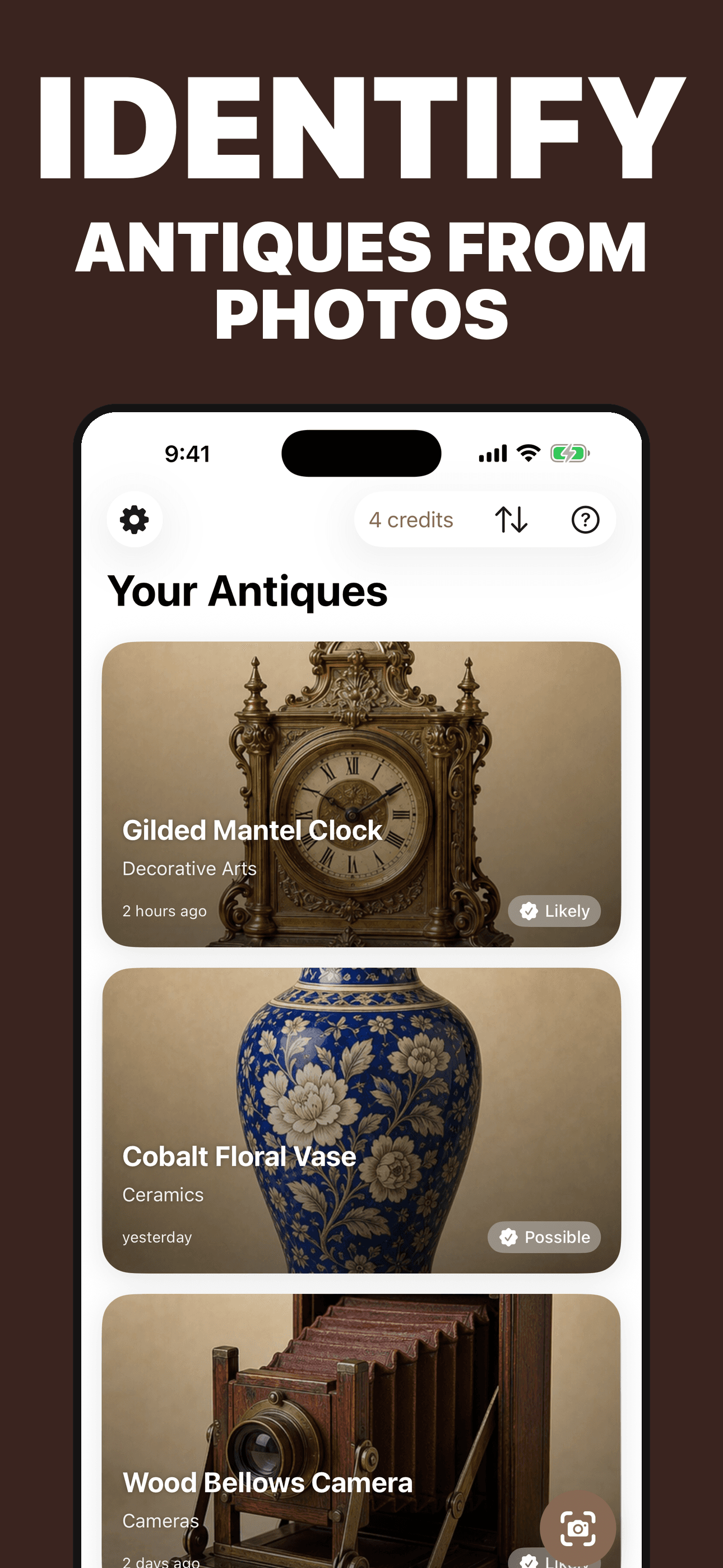
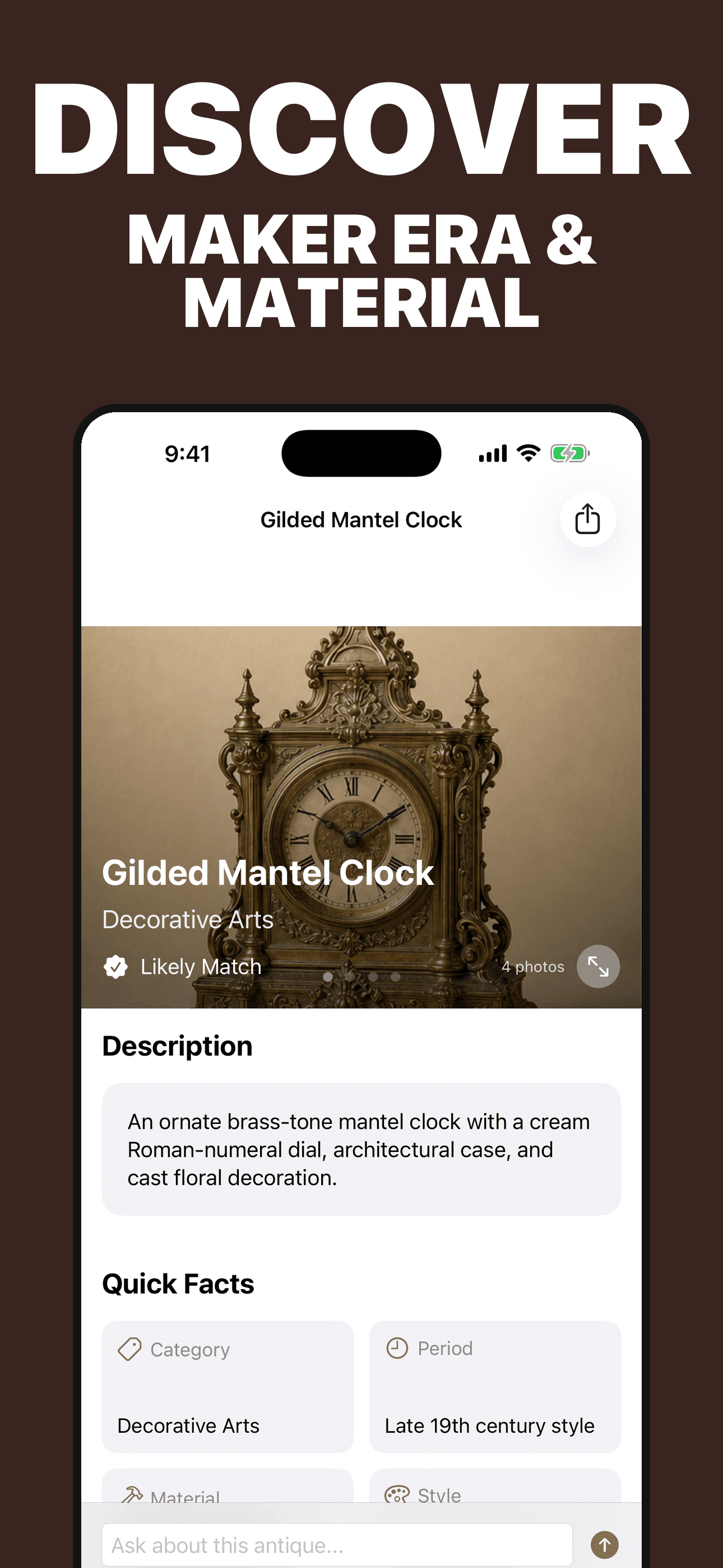
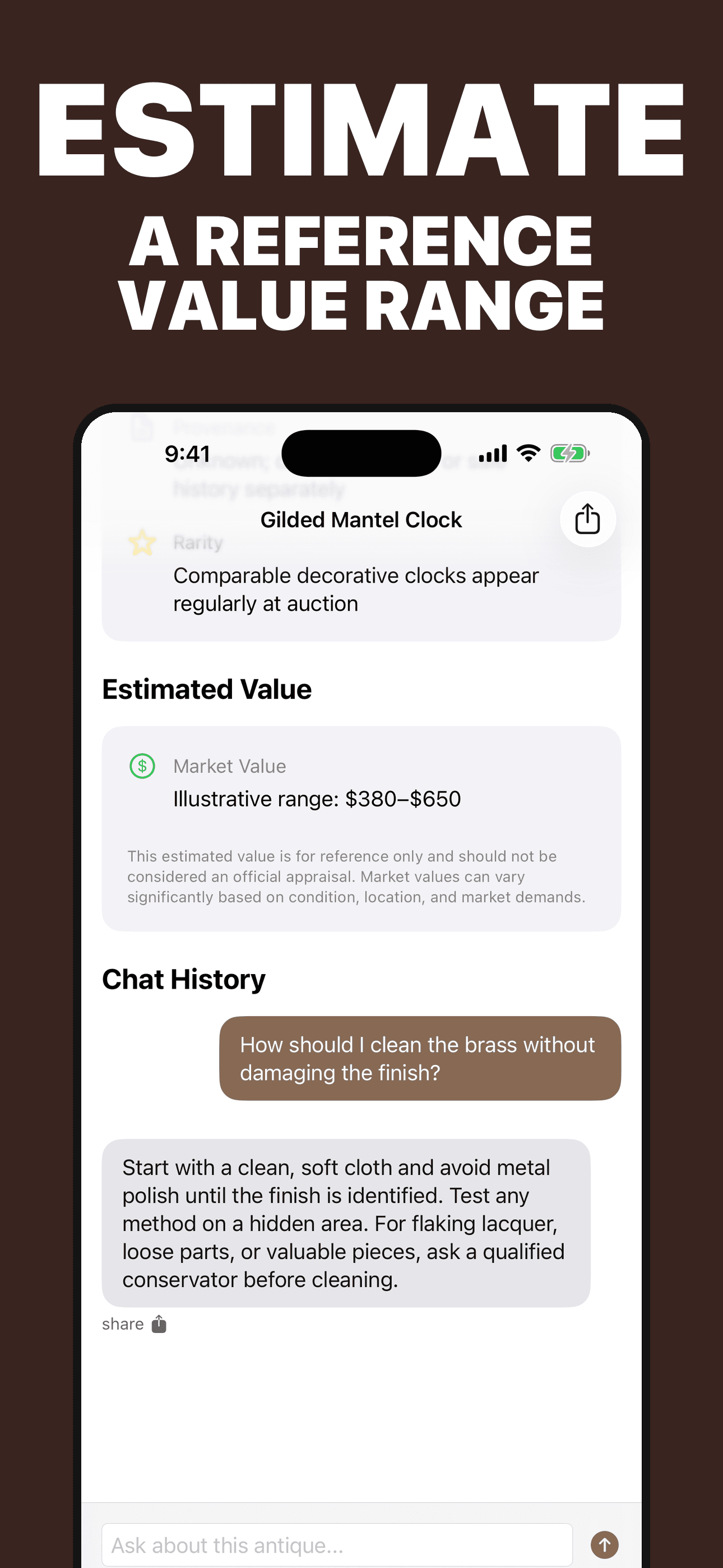
These are actual Antikr screens. The app organizes a possible match, visible clues, historical context, and an illustrative reference range; it does not authenticate, certify provenance, or provide a professional appraisal.
Try the app
Antikr accepts up to four selected photos and organizes a likely type, style, period, maker, material, origin, visible condition, and historical context. Save the result, ask follow-up research questions, or export a PDF while keeping professional decisions separate.
Primary references
These references support the research, provenance, conservation, and appraisal boundaries in this guide. They do not endorse Antikr; IRS guidance is U.S.-specific.
Direct answers
Photograph the whole object from several angles, then add close-ups of marks, labels, signatures, construction, hardware, materials, decoration, damage, and repairs. Compare several agreeing clues against museum collections, specialist references, and reliable records rather than trusting one photo or one suggested match.
Use evenly lit front, side, back, top, base, and underside views when safe, plus readable close-ups of maker marks, labels, signatures, joints, hardware, textures, wear, and restoration. Include exact dimensions and a neutral scale reference.
No. Appearance alone cannot prove age, maker, attribution, authenticity, or whether a mark belongs to the object. Materials testing, direct examination, documentary research, and specialist expertise may be needed.
No. Antikr can show an illustrative reference range, not a professional appraisal or guaranteed sale price. Value can change with authenticity, provenance, condition, restoration, dimensions, location, venue, fees, and current demand.
Start with receipts, inventories, family records, exhibition or dealer labels, correspondence, photographs, catalogues, and prior sale records. Provenance is the documented ownership history of an object, and gaps are common; a photo result cannot create missing evidence.
Usually not until the materials, surface, and condition are understood. Cleaning or polishing can remove original finishes, patina, residues, labels, or evidence and may cause damage. Ask a qualified conservator before treating a fragile, altered, or potentially important object.